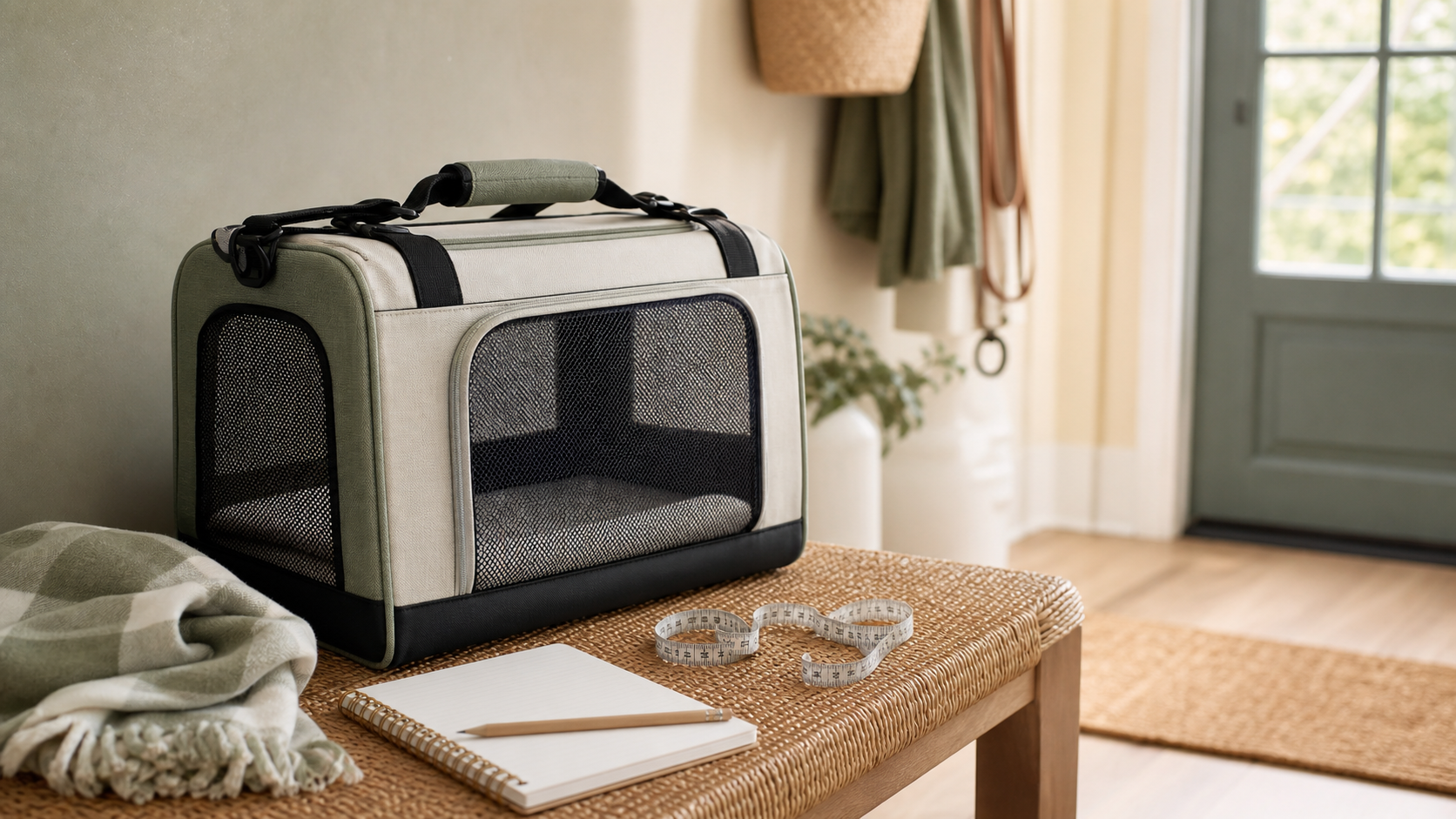
The carrier decision starts with two rulers. One belongs to the airline: will this container fit where the cabin crew needs it to fit? The other belongs to the pet: can the animal settle inside without being folded into the shape of the bag? Product labels tend to blur those questions together. Owners should keep them separate until both answers are clear.
Airline fit is only the first gate
The FAA says airlines decide whether pets may travel in the passenger cabin, and that a pet container in the cabin is treated as carry-on baggage. The same FAA guidance says the container must fit under the seat without blocking the path to the aisle and must remain properly stowed during ground movement, takeoff, and landing.
That tells an owner what the carrier must do for the aircraft. It does not tell the owner whether the carrier is comfortable for a particular cat or small dog. A soft-sided bag can meet the under-seat rule and still be a poor match if the floor sags, the opening is awkward, or the animal has to sit with its head pressed into mesh.
Read the listing in this order
The airline's yes can still be conditional
The FAA notes that airlines may have their own cabin-pet procedures, including pet type limits, cabin pet limits, and requirements that the pet remain in the container. That means the product label cannot answer every travel question.
So the useful question is not whether a product page says airline approved. The useful question is which airline, which seat, which aircraft, and which current policy. A carrier bought for one route can be wrong for another.
A better pre-purchase routine
Before a carrier becomes the travel plan, slow the decision down.
- Measure the pet's standing height, resting length, and shoulder width before shopping.
- Prefer listings that state usable interior measurements, not only outside dimensions.
- Check the floor insert and whether it stays flat under weight.
- Confirm the airline's current carrier rules before booking or packing.
- Ask a veterinarian about travel concerns for pets with health, age, breathing, mobility, or stress issues.
The right answer may be a different carrier, not a bigger one
For a car trip or a vet visit, a roomier and sturdier carrier may be the better choice. For an in-cabin flight, the limiting dimension may be the space under the seat. That can push owners toward a soft-sided carrier with less usable height than they would choose at home.
The honest recommendation is therefore boring but useful: match the carrier to the trip, then check the animal's posture inside it. If both cannot work at the same time, the plan needs to change before travel day.
Review basis
This is a research-based fit guide, not a direct carrier-testing review. PetRoutineGuide did not test a specific carrier for this article and does not use affiliate links here.
Sources
Federal Aviation Administration, Cabin Safety: Pets FAQ; AVMA client brochure, Traveling With Your Pet. These sources support travel-policy framing and general carrier-space cautions, not product endorsements.