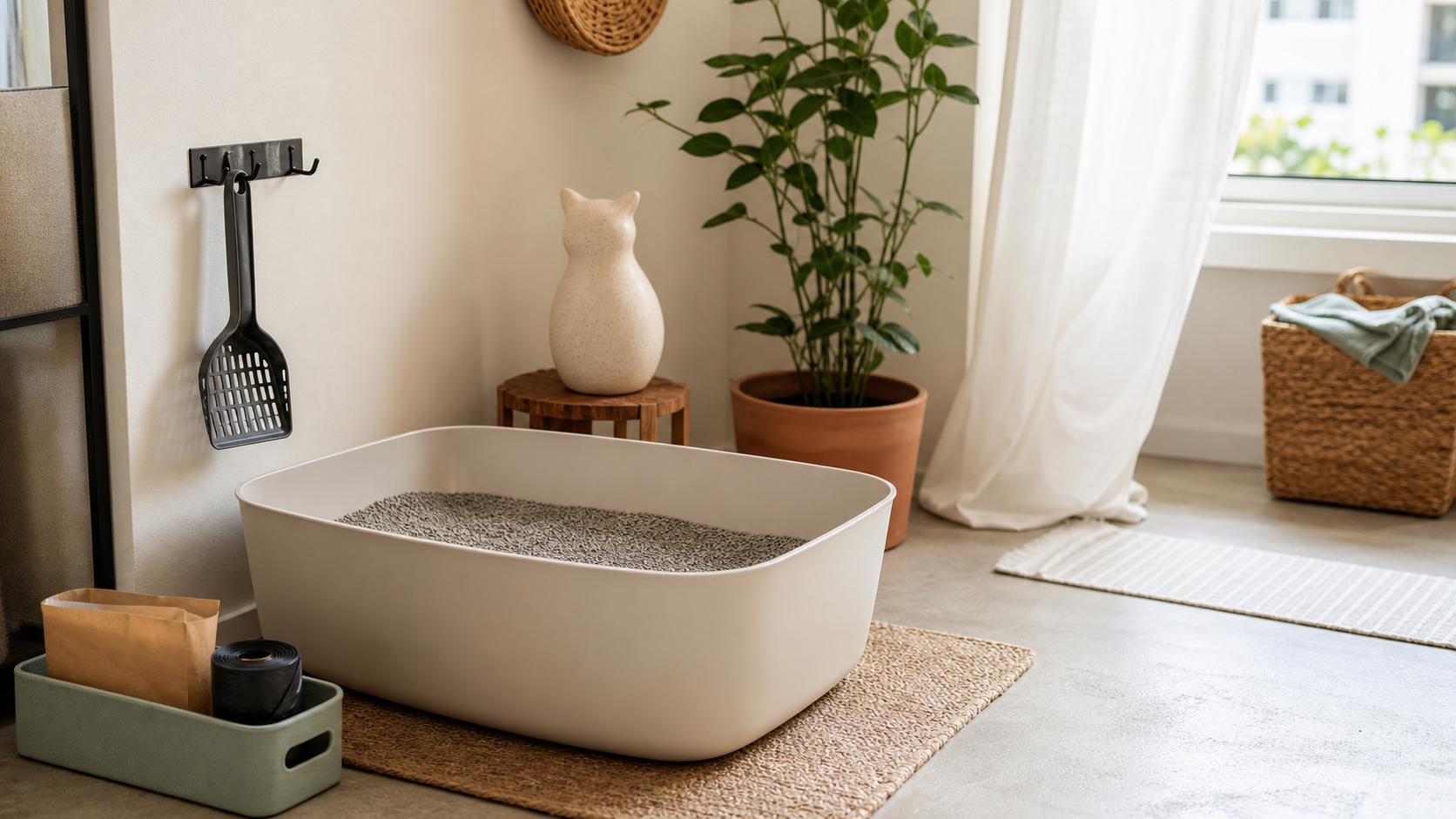
The fastest way to overspend on litter gear is to treat smell as a brand problem first. Sometimes the product is the issue. More often, the setup is asking too much from the cat, the owner, or both: a tight box, a noisy corner, a lid that slows scooping, supplies stored two rooms away, or a scent chosen for people instead of the animal using the box.
Make the box easy to choose
Ohio State University's Indoor Pet Initiative gives a simple starting point: a litter box should be large enough for a cat to stand on all fours and turn around. It also notes that many cats prefer fine-grained, unscented litter. Those two details should come before any discussion of lids, deodorizers, liners, or mats.
That order changes the recommendation. A covered box may look cleaner in a living room, but it can make the usable space feel smaller and can trap smell close to the cat. A cabinet enclosure may hide the box from guests while making it harder for the owner to scoop. A strong scent may make the room feel handled while making the box less appealing.
Owner friction is part of odor control
A box that is hard to clean will not stay clean as reliably as a box that takes thirty seconds to scoop. This sounds like a human convenience issue, but it becomes a cat setup issue quickly. The scoop, bags, trash route, lid, mat, and storage location all decide whether cleaning is simple enough to happen at the right time.
The better article does not shame the owner or pretend a product can fix every routine. It asks whether the setup makes the right habit easier. If the owner has to pull the box out from under furniture or dismantle a cabinet each time, the next purchase should probably be about access, not fragrance.
Location is not just about hiding the box
The ASPCA's litter-box guidance points owners toward quiet, accessible locations and away from setups that feel difficult or unpleasant for the cat. Cornell Feline Health Center also describes location preference and litter-box aversion as possible pieces of house-soiling problems.
For odor, this matters in a quieter way. A hidden corner with poor airflow may please the room layout while making smell linger. A laundry area may seem convenient until appliance noise makes the cat avoid it. A hallway may be easy to scoop but too exposed for a cat that wants a calmer path.
Stop the product search when the signs change
Cornell's house-soiling guidance is a useful boundary for a product article: elimination problems can involve medical causes as well as environmental or behavioral factors. A litter-box setup guide should not diagnose those causes. It should tell the reader when shopping is the wrong next move.
If a cat suddenly avoids the box, strains, seems painful, urinates outside the box, or changes elimination habits, the practical next step is veterinary care. No deodorizer, litter mat, cabinet, or scented product should be framed as the answer to that situation.
A five-minute setup audit
Before buying odor gear, stand where the cat enters the box, then where the owner stands to clean it. That short walk usually tells more than a product headline.
- Is there room for the cat to turn without backing into a wall or lid?
- Can the owner scoop without moving furniture or taking apart the box?
- Are bags, scoop, and trash close enough for the routine to stay easy?
- Does the location trap air, startle the cat, or sit too close to food?
Let each product do one job
A mat can reduce tracking. A larger box can make turning easier. A wall-mounted scoop can remove a cleaning delay. A different location can improve access or airflow. None of those should be sold as a universal odor solution.
The more honest recommendation is to name the job first, then choose the item. If the problem is cleaning friction, fix access. If the problem is tracking, consider the mat. If the problem is sudden avoidance, stop shopping and call a veterinarian.
Review basis
This guide discusses household setup and routine friction. It does not diagnose litter-box avoidance, make treatment claims, or rank odor-control products. PetRoutineGuide does not use affiliate links here.
Sources
Ohio State University Indoor Pet Initiative, Litter Boxes; Cornell Feline Health Center, Feline Behavior Problems: House Soiling; ASPCA, Litter Box Problems. These sources support box-size, substrate, odor, placement, access, and professional-care boundary framing.